
Search Georgetown County Court Records
The main online path for Georgetown County court records is the South Carolina Judicial Branch case records search, which links to the Georgetown Public Index. The Public Index is the first stop for Circuit Court and Summary Court case data where available. It is also the place most users check before contacting the Clerk of Court for a file review, certified copy, or older court record.
The system is not the only record channel. Family Court public cases may also be searched through the FCCMS Family Court Public Access Portal, probate cases use the South Carolina Probate Search, and court rosters use the Georgetown docket search. The Judicial Branch notes that cookies and JavaScript must be enabled, and some browsers need a pop-up exception for case detail screens.
- Open the Judicial Branch case records page and choose the Georgetown County Public Index link.
- Search by exact case number when known, or enter a party name and narrow by court or case type.
- Allow pop-ups for publicindex.sccourts.org if the case detail screen does not open.
- Use the roster or docket search when the goal is a court date instead of the full case history.
- Contact the office that keeps the file when a certified copy, sealed-status answer, or missing record is needed.
The official Georgetown County online services page also routes users to court case search, docket search, and traffic-ticket payment. That page is useful when a person starts at the county site rather than the state court site.
Georgetown County Court Records Search Fields
The Georgetown Public Index screen may ask for different fields depending on the court and search path. The research confirms the county link and the state access rules, but direct automated access to the deep screen was limited. For that reason, broad field labels should be treated as the normal Public Index search pattern, not as a promise that every label appears on every screen.
| Field Label | Type | Required | Notes / Format |
|---|---|---|---|
| County | Link or selected county | Yes | Georgetown is selected from the statewide county list. |
| Case Number | Text | No | Best when the exact court case number is known. |
| Party Name | Text | No | Useful for plaintiff, defendant, petitioner, respondent, or criminal defendant searches. |
| Court Type / Case Type | Dropdown or filter | No | May narrow Circuit, Summary, Magistrate, or Municipal records where available. |
| Date / Filing Date | Date or range | No | Helps narrow common names and broad civil or criminal searches. |
| Search / Reset | Button | Yes | Search runs the query; reset clears the entered terms where exposed. |
Types of Georgetown County Court Records
Georgetown County court records are split by court function. The Clerk of Court maintains Common Pleas, General Sessions, and Family Court records from the Judicial Center. Common Pleas covers civil disputes such as automobile accident cases, medical malpractice, personal injury, judgments, Lis Pendens, arbitration actions, attachments, motions, and lower-court appeals. General Sessions covers felony and serious misdemeanor criminal prosecutions. Family Court covers divorce, custody, child support, alimony, visitation, paternity, name changes, and related domestic matters.
Summary and local court records are separate. Magistrate Courts handle lower-level criminal and traffic matters, preliminary hearings, warrants, bond, evictions, and civil claims within the magistrate limit. Municipal Courts in Georgetown, Andrews, and Pawleys Island handle city or town police and ordinance matters. Probate Court handles estate, guardianship, conservatorship, commitment, marriage-license, and related probate files. Each court record should be requested from the court that created it.
- Civil court records include pleadings, motions, judgments, orders, appeals from lower courts, and civil docket entries.
- Criminal court records include charges filed, pleas, bond entries, hearings, dispositions, and sentencing entries.
- Family court records may include public divorce or custody dockets, but juvenile, adoption, abuse-neglect, and termination cases are confidential.
- Probate records include estate cases, guardianships, conservatorships, commitments, and marriage-license records.
- Traffic and summary records may appear through state ticket search, magistrate records, municipal court, or the Public Index.
The county Common Pleas source is shown on the Georgetown County Court of Common Pleas page.
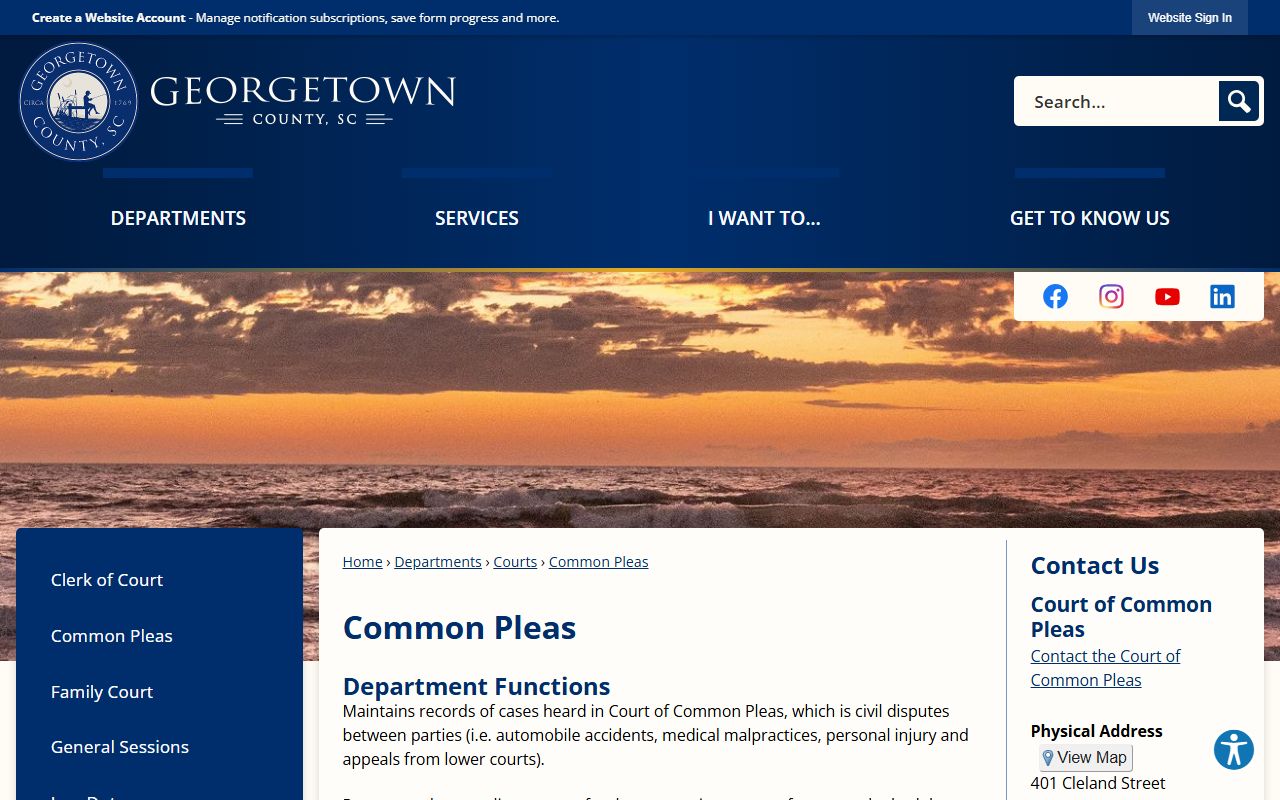
Common Pleas is the civil side of Circuit Court, so its page helps explain why civil Georgetown County court records are handled through the Clerk of Court and court rosters.
What Georgetown County Court Records Show
A court record is more than a name search result. It can show the case number, court division, parties, filing date, case status, docket events, hearings, orders, judgments, continuances, disposition, bond, sentence, court costs, and document references. Not all fields appear in all records. A traffic ticket, an estate case, and a felony prosecution use different court systems and show different data.
| Field | What It Shows |
|---|---|
| Case Number | The public case identifier used by the court or portal. |
| Court / Division | Common Pleas, General Sessions, Family, Magistrate, Municipal, Probate, or another court path. |
| Parties | Plaintiff and defendant, State and defendant, or petitioner and respondent names. |
| Filing Date | The date the case, charge, petition, or proceeding was filed or entered. |
| Docket Entries | A chronological list of filings, hearings, orders, motions, continuances, and case actions. |
| Disposition | The outcome, such as dismissed, judgment entered, guilty plea, verdict, closed, or transferred. |
| Redactions | Addresses, juvenile data, confidential family cases, sealed cases, and protected personal data may be withheld. |
The Georgetown County General Sessions source is available through the county General Sessions page.
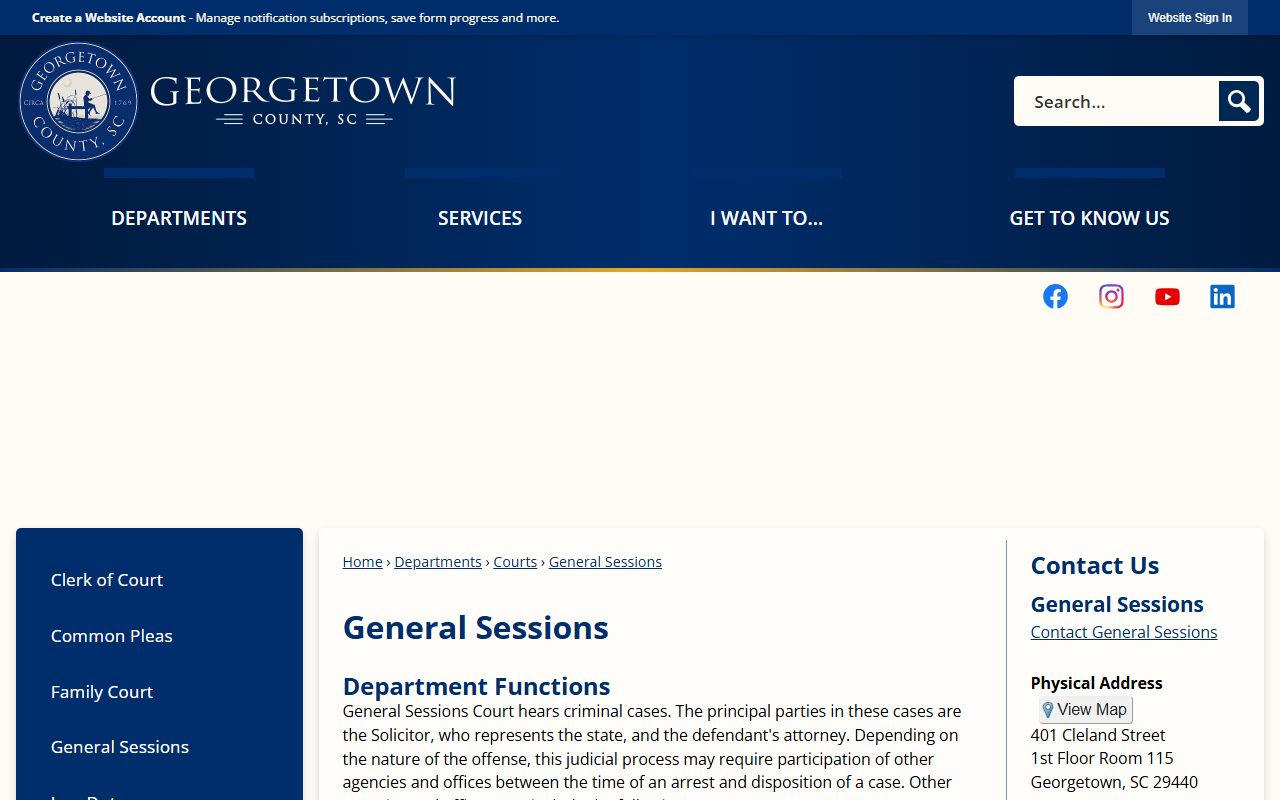
General Sessions entries are criminal court records, so the same case number may be needed when asking the Clerk or Solicitor about prosecution status.
Public Access to Georgetown County Court Records
South Carolina public access rules use more than one path. County administrative records are handled under the South Carolina Freedom of Information Act, while judicial records that are not available through public court websites can fall under Rule 610, SC Appellate Court Rules. Rule 610 can deny a request when the record is already available through public court websites or contains confidential information.
For county department records, Georgetown County uses NextRequest. The county FOIA page says an initial determination is due within 10 business days for records no more than 24 months old and up to 20 business days for older records. A 25 percent deposit may be required before retrieval starts. Judicial case data should still be searched in court systems first.
| Channel | Use For | Limit |
|---|---|---|
| Public Index | Public Circuit, Summary, Magistrate, and some Municipal case data | Not all cases or documents are online. |
| FCCMS | Public Family Court cases and dockets | Confidential family categories are excluded. |
| Probate Search | Probate case number, party, filing date, and status | Separate from Circuit and Family Court records. |
| NextRequest | County administrative records and prior released FOIA records | Not the main path for court case files. |
| Rule 610 | Judicial Branch records not available through public search | Confidential and already-public records may be denied. |
The official Judicial Branch Rule 610 request resource is shown on the SC Judicial Branch Rule 610 request page.
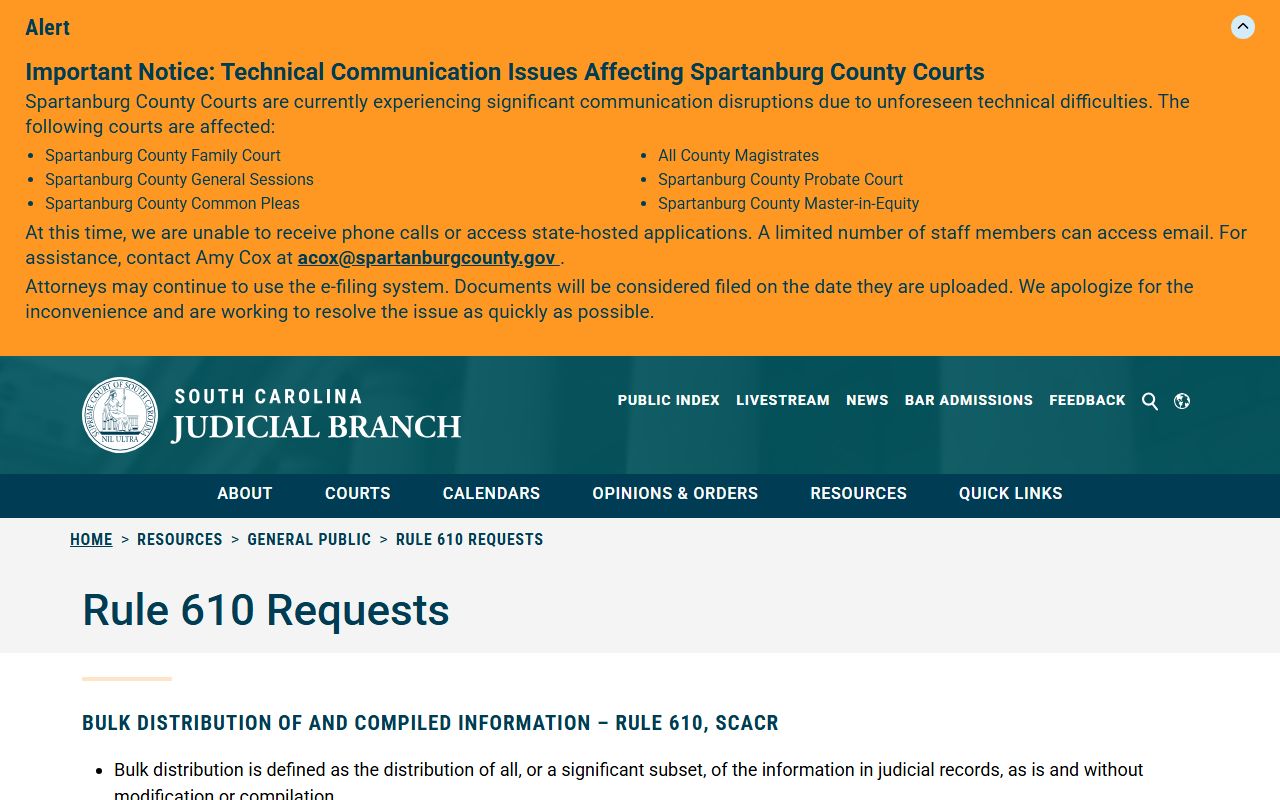
Rule 610 is best understood as a judicial-record fallback, not a shortcut around the Georgetown Public Index or the Clerk of Court.
Restricted Georgetown County Court Records
Some Georgetown County court records are not public even when a related case exists. The Family Court page excludes adoptions, abuse-neglect, termination of parental rights, juvenile matters, and judge-sealed private cases from the Clerk public access system. State juvenile law also treats juvenile court records as confidential and open only by court order or specific legal authorization.
Expunged and sealed records are different from ordinary public files. Expungement under South Carolina Title 17, Chapter 22 can remove qualifying Internet-based public records after the proper court or solicitor process. Sealing restricts access by court order or law. FOIA cannot be used to unseal a judge-sealed file or erase a charge.
The Family Court source for confidential case categories is the Georgetown County Family Court page.
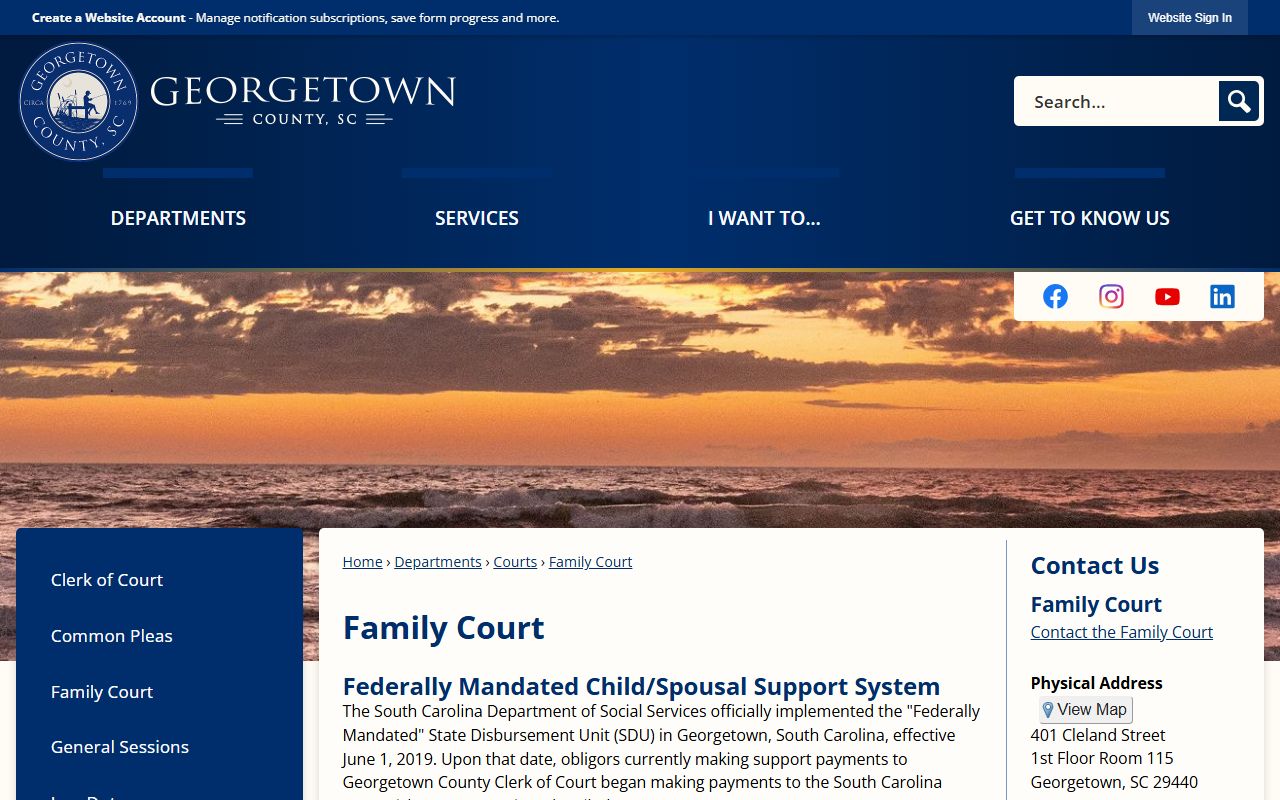
Family Court records need special care because public divorce or support dockets can exist beside confidential juvenile, adoption, and abuse-neglect records.
Georgetown County Court Records Requests
When online search is incomplete, Georgetown County court records should be requested from the office that keeps the file. The Clerk of Court is the local contact for Common Pleas, General Sessions, and Family Court. Magistrate, Municipal, Probate, sheriff, and SCDMV records use different offices. Certified copies may require a clerk request even when an online index confirms the case.
Bring or provide the case number, party names, court type, and filing date if known. Name-only searches can be slow because public records may use initials, middle names, maiden names, business names, or spelling variants. If the request concerns a court date, ask for the roster or docket source. If it concerns a filed document, ask about copy fees and certification before assuming an online printout will be accepted for legal use.
Georgetown County Clerk of Court
401 Cleland Street, 1st Floor, Room 115
Georgetown, SC 29440
843-545-3215
Monday-Friday, 8:30 a.m.-5 p.m.; closed legal holidays
The South Carolina FOIA statute source is shown at the state Freedom of Information Act code page.
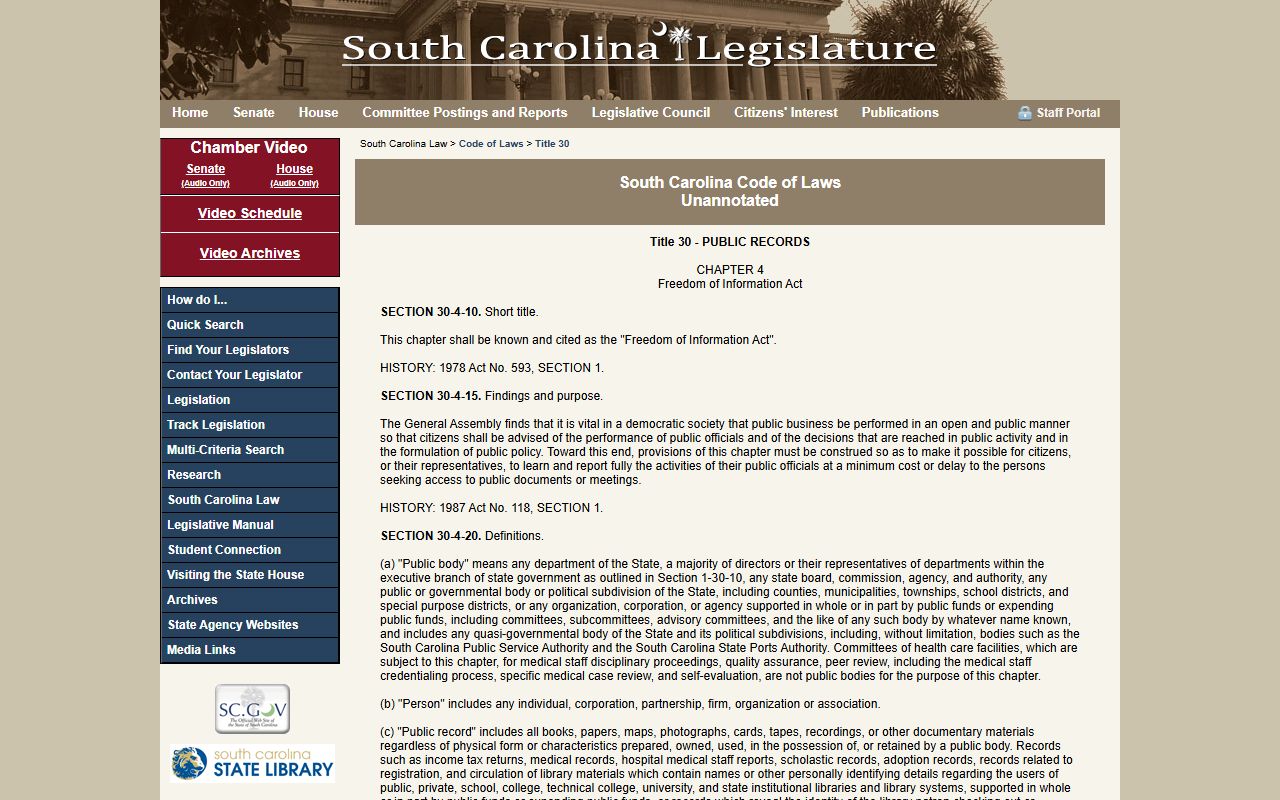
FOIA helps with county department records, while the Clerk and Rule 610 paths remain the better fit for Georgetown County court records held by the judiciary.
The Rule 610 text appears at the SC Judicial Branch Rule 610 text page.
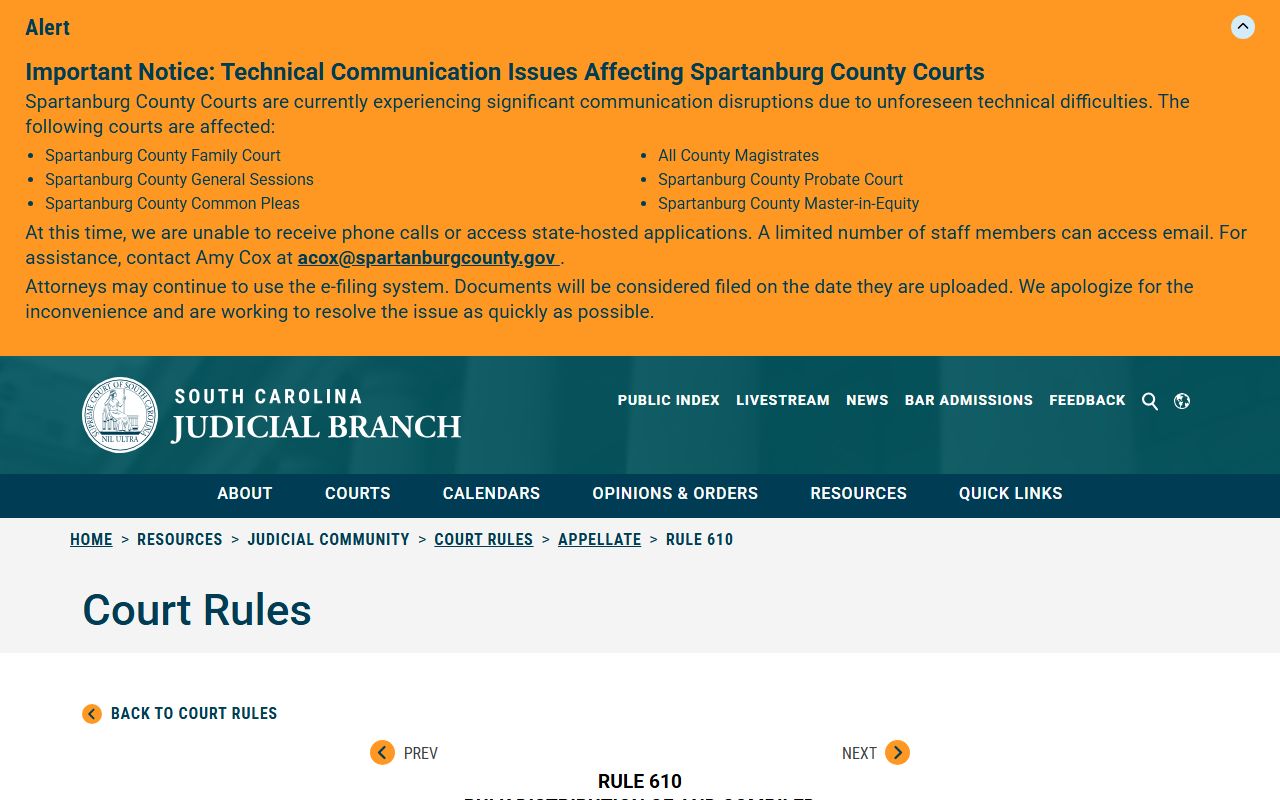
Rule 610 explains why some judicial records are released through a court-record process rather than a county administrative FOIA portal.