
Georgetown County Criminal Court Records
Criminal court records in Georgetown County are maintained by the court that handles the charge. General Sessions is the criminal side of Circuit Court and handles felony and serious misdemeanor prosecutions. Magistrate Court handles lower-level criminal and traffic offenses within summary-court limits, preliminary hearings, arrest warrants, search warrants, bond, and related summary functions. Municipal Court handles city or town police and ordinance matters for Georgetown, Andrews, and Pawleys Island.
The Clerk of Court keeps General Sessions records at the Judicial Center. The Solicitor is the local prosecutor for General Sessions charges, and Georgetown County identifies Jimmy A. Richardson II as Chief Prosecuting Attorney. A criminal court record can include charges filed, indictment or warrant information, arraignment, bond entries, motions, hearings, pleas, jury or non-jury proceedings, disposition, sentence, court costs, and docket entries. For a closer look at the charge itself, use the Georgetown County arrest records and charges page.
The county prosecution source appears on the Georgetown County Solicitor page.
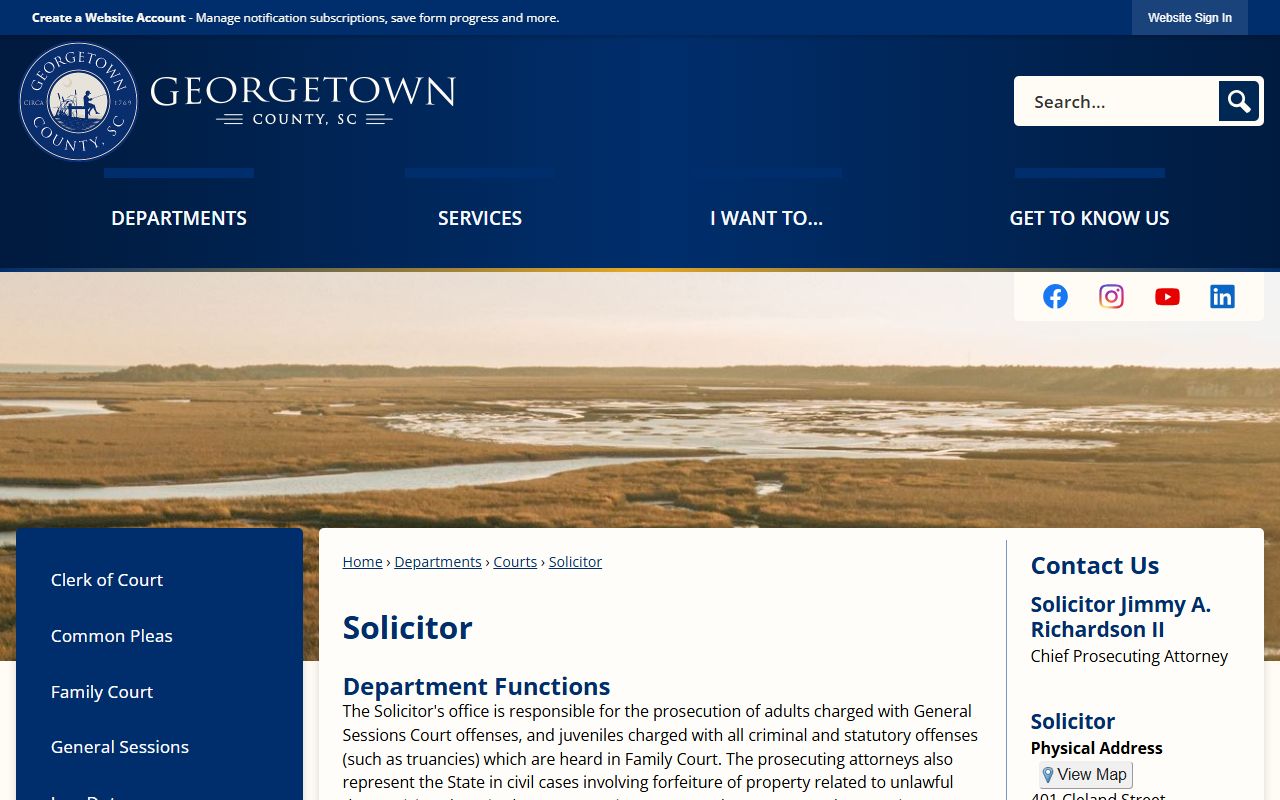
The Solicitor page matters because that office is tied to how criminal charges are prosecuted after arrest and before disposition.
Search Georgetown County Criminal Cases
The first online channel for Georgetown County criminal court records is the Georgetown Public Index through the South Carolina Judicial Branch case records search. Use the Public Index for General Sessions and summary case data where available. Use court rosters when the question is a hearing date. Magistrate and Municipal matters may appear in Public Index if available, but some local records still require court contact.
- Open the Georgetown Public Index from the Judicial Branch case-records page.
- Search by defendant name or case number, then narrow by criminal court or case type if the screen allows it.
- Open the case detail and read the docket entries, charge list, hearings, and disposition fields.
- Use the docket or roster search to confirm court dates, terms, judge, or hearing settings.
- Contact the Clerk of Court for certified copies, older records, sealed-status questions, or records not shown online.
If the person is only known through an arrest or jail booking, the sheriff booking entry is not the final criminal case record. It may show a charge and bond before the court file is complete. After the prosecution is filed, the court record is the better source for pleas, dismissal, conviction, sentence, and final outcome.
For summary charges, also check the court named on the ticket, warrant, or booking entry. Magistrate and Municipal records can have different court contacts than General Sessions, especially for traffic, ordinance, failure-to-appear, and lower-level criminal matters.
Georgetown Criminal Case Flow
A Georgetown County criminal court record grows as the case moves through each stage. The first public charge may appear on a booking record, but the court file develops when the case reaches the court system. The charge may be amended, reduced, dismissed, or resolved by plea or trial. A docket entry can show each stage even when the full document is not viewable online.
Case flow: Charges Filed › Arraignment › Pretrial / Motions › Plea or Trial › Disposition › Sentencing
| Stage | What Happens |
|---|---|
| Charges Filed | The charge enters the court process through a warrant, indictment, complaint, or prosecutor filing. |
| Arraignment | The defendant is advised of the charge and a plea may be entered. |
| Pretrial / Motions | The parties file motions, request hearings, exchange information, or prepare for trial. |
| Plea or Trial | The case resolves by plea, bench trial, jury trial, dismissal, or other court action. |
| Disposition | The court records the final result for each charge. |
| Sentencing | If there is a conviction or plea, the court records punishment, costs, probation, restitution, or other sentence terms. |
Georgetown County Criminal Record Fields
The public criminal court record can show much more than a charge name. It may identify the court, case number, defendant, attorney, prosecution office, arresting agency, bond entries, hearings, charges, plea, disposition, sentence, and docket activity. The research confirms expected Public Index and docket fields, while noting that exact Georgetown result columns may vary because the live detail screen can require browser settings such as cookies, JavaScript, and pop-ups.
| Field | What It Shows |
|---|---|
| Case Number | The criminal court identifier used to request or track the file. |
| Defendant | The person charged in the criminal prosecution. |
| Court / Division | General Sessions, Magistrate, Municipal, or another criminal court path. |
| Charges | The accusations filed in court, which may differ from the first booking text. |
| Docket Entries | Arraignments, motions, hearings, continuances, orders, dispositions, and sentence entries. |
| Plea | The defendant's formal answer, such as guilty, not guilty, or another allowed plea. |
| Disposition | The result of a charge, such as guilty, dismissed, not guilty, nolle prosequi, or transferred. |
| Sentence | The punishment or terms ordered after conviction, when public and entered. |
- Disposition
- The final result of a charge or case, such as dismissed, guilty, not guilty, or nolle prosequi.
- Arraignment
- A hearing where the charge is read and a plea may be entered.
- Bond
- Money or conditions set to secure the defendant's appearance in court.
- Sentence
- The punishment or terms ordered after a conviction or guilty plea.
Charges vs Convictions
A Georgetown County criminal court record may show charges that never become convictions. A charge is an accusation filed in court. A conviction is the result after a guilty plea, guilty verdict, or other adjudication that establishes guilt. A dismissed, dropped, reduced, or not-guilty charge should not be read as a conviction.
| Point | Charge | Conviction |
|---|---|---|
| Meaning | An accusation or filed offense | A finding or plea establishing guilt |
| Timing | Appears early in the case | Appears only after court resolution |
| Can Change | May be amended, reduced, dismissed, or nolle prossed | May be appealed, corrected, or affected by post-conviction relief |
| Record Use | Shows what was alleged | Shows the final criminal outcome and sentence basis |
Access Georgetown Criminal Court Records
Public criminal case data is generally searched through the court systems first. South Carolina FOIA applies to public records held by public bodies, but judicial records often use court rules and public court websites. Rule 610 is the judicial-record request route when the record is not available through a court website and is not confidential.
Law-enforcement and court records are not the same. A sheriff booking record can show arresting agency, charge text, booking date, release date, and bond where posted. The court record tells what happened after the charge was filed. Georgetown County's sheriff FAQ also states that charges are not posted until warrants are served, and bonds are not posted until Bond Court submits paperwork to the Booking Officer.
Note: A public criminal case entry can remain visible even after home addresses are removed from Public Index display.
Sealed vs Expunged Records
Restricted criminal court records require close reading. Sealed records are hidden from public access by law or court order. Expunged records go through a legal removal process for qualifying charges or dispositions. South Carolina expungement is not a FOIA request, and eligibility depends on the charge, court, disposition, waiting period, and prior record rules.
| Point | Sealed | Expunged |
|---|---|---|
| Public View | Restricted from general public access | Removed from public access after the proper order |
| How It Happens | By statute, rule, or court order | Through the South Carolina expungement process |
| Example Limit | Juvenile and judge-sealed matters | Qualifying summary-court or criminal records only |
| Wrong Path | FOIA does not unseal the file | FOIA does not erase the record |
South Carolina expungement statutes are shown in Title 17, Chapter 22.
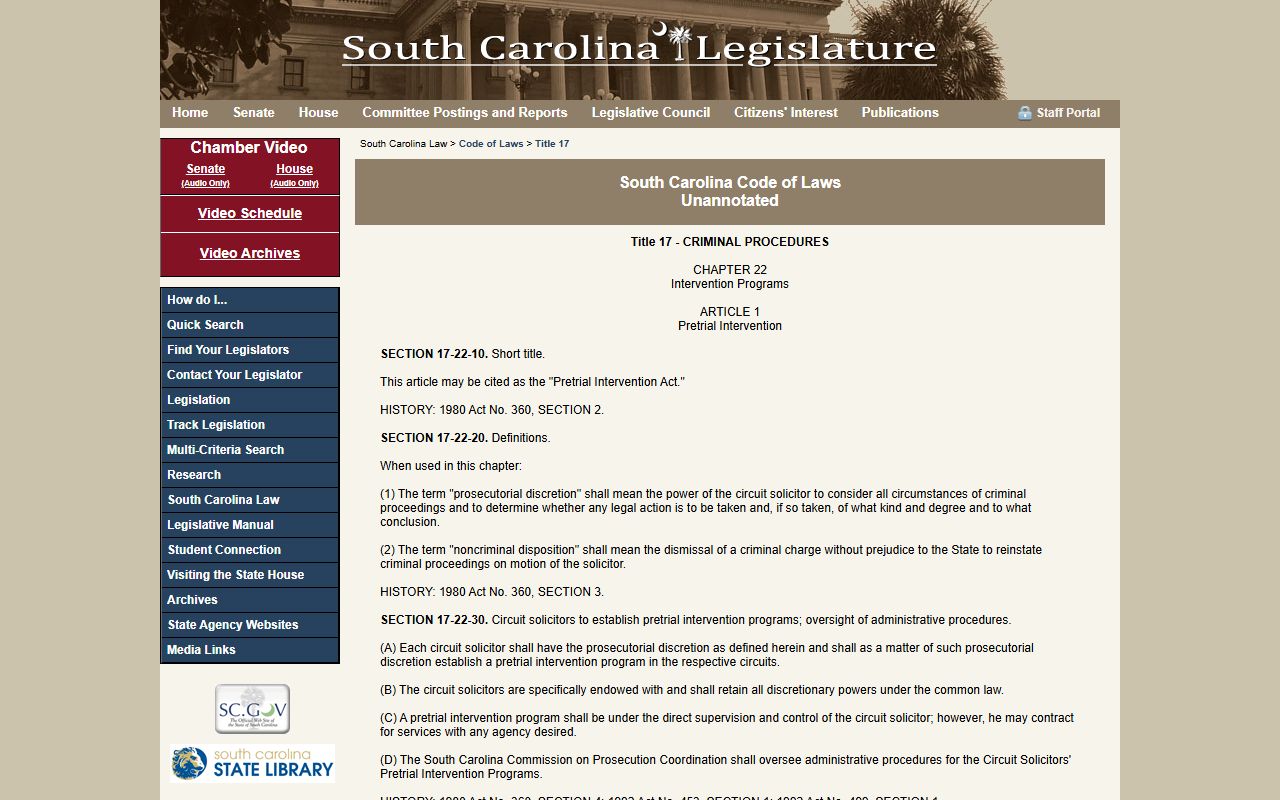
The expungement statutes matter because they affect whether a criminal court record remains visible in Internet-based public records.
Restricted Georgetown Criminal Records
Juvenile records are a major restriction. South Carolina juvenile law treats juvenile court records as confidential and open only by court order or specific legal authorization. Family Court juvenile records, adoption, abuse-neglect, termination of parental rights, and judge-sealed private cases are not available through the Clerk's public access system. Sealed criminal and civil cases also require court authority.
The juvenile confidentiality source is shown in South Carolina Title 63, Chapter 19.
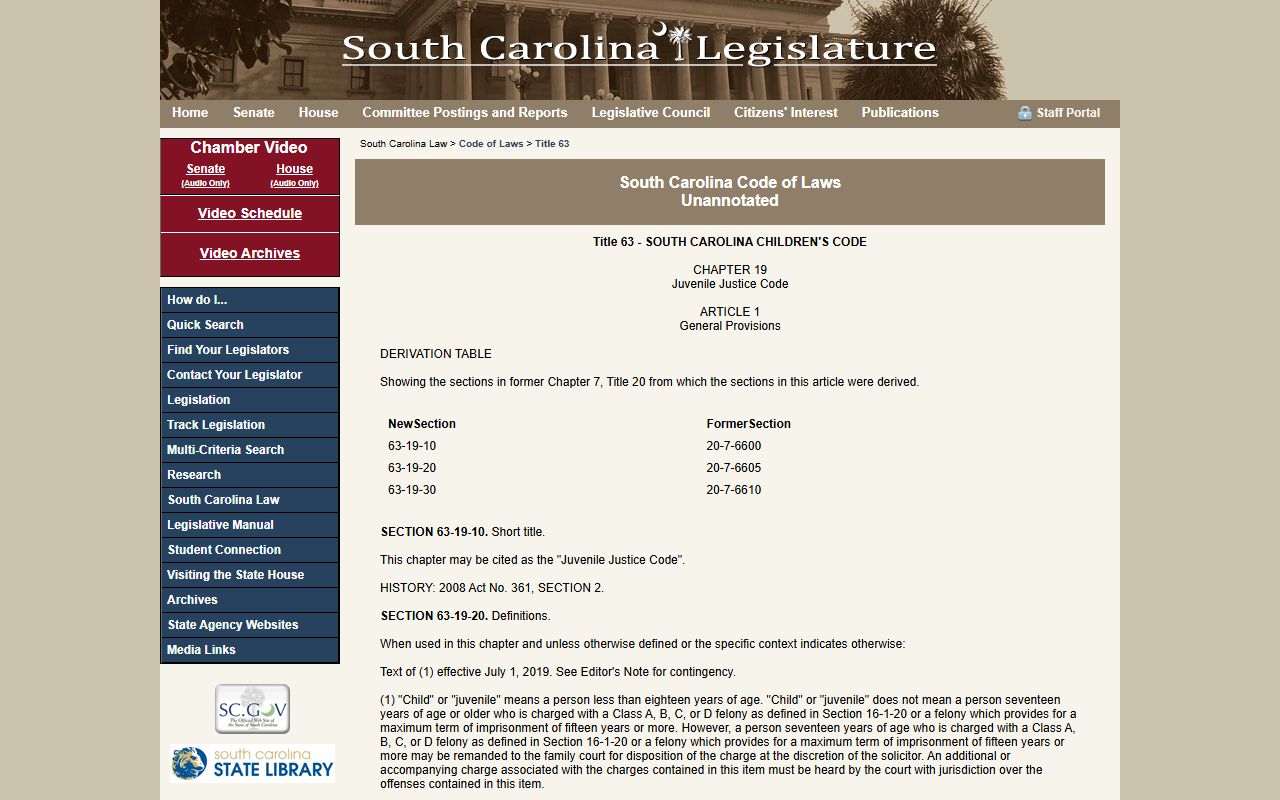
Juvenile confidentiality is one reason a name search may not return every law-related event tied to a young person.
Federal Criminal Records Near Georgetown
Some criminal records tied to Georgetown County residents are not state court records. Federal prosecutions use the U.S. District Court for the District of South Carolina, federal prosecution offices, PACER, and federal custody channels. PACER and the PACER Case Locator are separate from South Carolina Public Index, and fees may apply under PACER rules.
The federal prosecution source is the U.S. Attorney's Office for the District of South Carolina.
Federal prosecutions should not be searched only in Georgetown County court records because they are handled by the federal court system.
The federal contact source appears on the U.S. Attorney South Carolina contact page.
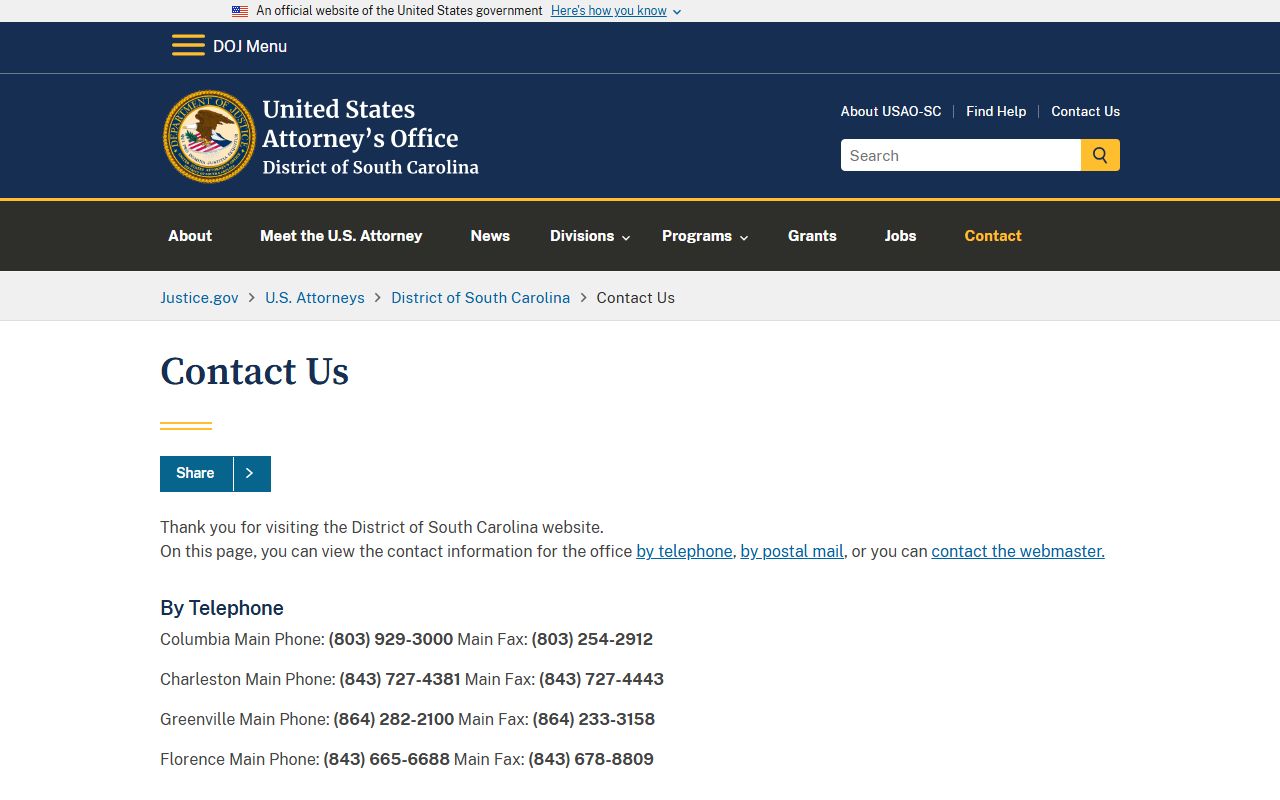
Federal contact pages are useful when a case is filed by federal prosecutors rather than the Georgetown County Solicitor.
For state charges, do not mix federal contacts into the Georgetown County search path. Start with the Public Index, rosters, Clerk of Court, Solicitor, Magistrate Court, or Municipal Court named in the record. Federal sources are relevant only when the case caption, court, prosecutor, or docket identifies a federal prosecution.
Federal inmate, marshals, and U.S. Attorney sources also do not prove a Georgetown County conviction. They are separate systems used only when the prosecution or custody record has moved into federal jurisdiction.